Make popping candy
Make your edible space dust We’re going to make our own version of space dust! Whaaaaat?! Surely you need a
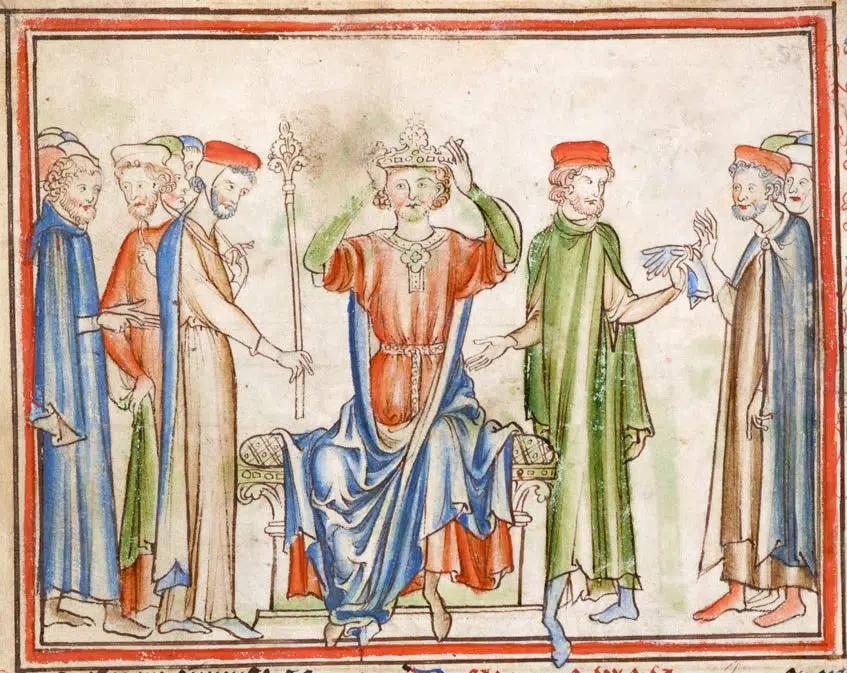
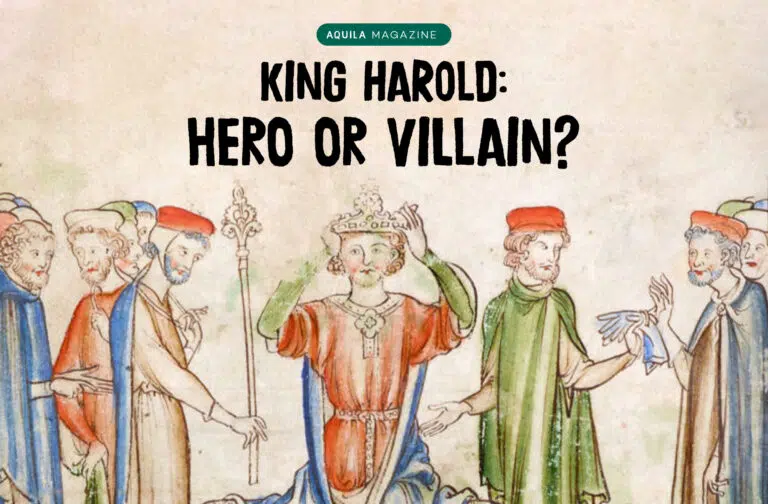
One date in history almost everyone knows is 1066 – the Battle of Hastings. But what do we know about King Harold, defeated by William the Conqueror in that battle?
1066 was a fateful year for Harold Godwinson. It began in glory only to end in drama and death. At the start of the year he was crowned King of England in Westminster Abbey; but enemies were already planning to take the country from him. Harold Hardrada of Norway and William, Duke of Normandy, were both preparing invasion fleets.
King Harold gathered an army together. He feared William most so he kept his men near the south coast of England, where the Normans would land. Lookouts along the cliffs and beaches watched nervously for William’s sails.
In spite of Harold’s preparations, many people were fearful for his future. A weird object had started to shine in the sky. It was not visible by day but at night it was almost as bright as the moon. It was like a huge star with a beam of light trailing behind it that shone halfway across the sky.
Nowadays we know that the object was a comet, Halley’s Comet which is visible every 75 years. People in 1066 were very superstitious: they thought that the object was a warning from God, foretelling disaster.
Trouble certainly followed the comet’s appearance. In September, Harold Hardrada’s army landed in Yorkshire. King Harold led his English army north and defeated the Norwegians in the Battle of Stamford Bridge. As night fell over the battlefield a wind sprang up and carried the smell of blood across the countryside towards the nearby city of York. The people of York were used to the smell of blood; they butchered animals in their streets nearly everyday. But the wind that brought this stench to their nostrils was an easterly wind, the wind that would bring Duke William’s fleet across the Channel from France. The smell was like a warning of further battles to come.
Harold hurried his men south, despite their wounds. They were too late to stop the Normans landing, and found them preparing for battle near the town of Hastings. Although the English soldiers were tired and weak, they pounced on the Normans straight away. At first they seemed to be winning a second victory. Harold set them a brave example, fighting on foot while Norman horsemen struck at him with swords. In the end he stumbled and fell to the ground, bleeding to death. Without their leader the English soldiers started to panic; the Normans seeing their confusion put them to flight, killing many of them as they fled.
Duke William had won the battle of Hastings and the crown of England was his.
From the facts above, Harold sounds like a brave but unlucky leader, faced by one too many battles in a short space of time.
However, there are clues that should make us think again about him. Most of these clues are to be found in the Bayeux Tapestry, an enormous piece of embroidery that was sewn by a group of English women shortly after Harold’s death. The work consists of dozens of pictures arranged in a sort of comic strip that tells of King Harold’s career and his final battle.
The story in the tapestry begins in the year 1064, when Edward the Confessor was King of England. We see Harold visiting Duke William in Normandy, fighting in William’s army and risking his life saving two of William’s men from quicksand. Next we see William honouring Harold by giving him arms – in other words making him one of his knights. Harold swears to be loyal to William for the rest of his life. Then he returns to England – and becomes the king when Edward dies.
We know that many years earlier, Edward had promised Duke William that he would be the next King of England. Some people think that Harold repeated the promise when he went to France. In any case, if he swore loyalty to William, he ought to have fought for him, not against him; he should have helped William gain the crown, not claim it for himself.
We shall never be certain of all the facts. We must remember that the women who made the tapestry were living under Norman rule.
They had to record what the Normans wanted so they may not have been entirely fair to Harold.
Their work is full of puzzling details. Most of the pictures have captions in Latin, and the caption above the fiercest scene from the Battle of Hastings says. “Harold Rex interfectus est” (King Harold is killed). The trouble is that we cannot tell which figure is Harold. One has an arrow in his eye and another is being slashed with a sword, but the caption could apply to either of them.
Unless we discover some more clues we shall never know how King Harold died.
And without more clues we shall never know what sort of man he was. Was he a hero or was he a villain?
If you enjoyed this journey back in time, check out a subscription to AQUILA magazine!
Words: The AQUILA team.

Make your edible space dust We’re going to make our own version of space dust! Whaaaaat?! Surely you need a

Can We Really Live on Mars? The Science of Terraforming What are we going to do when we have finished
Alien Brains When you imagine an alien, what do you see? Do you see a little green person with big
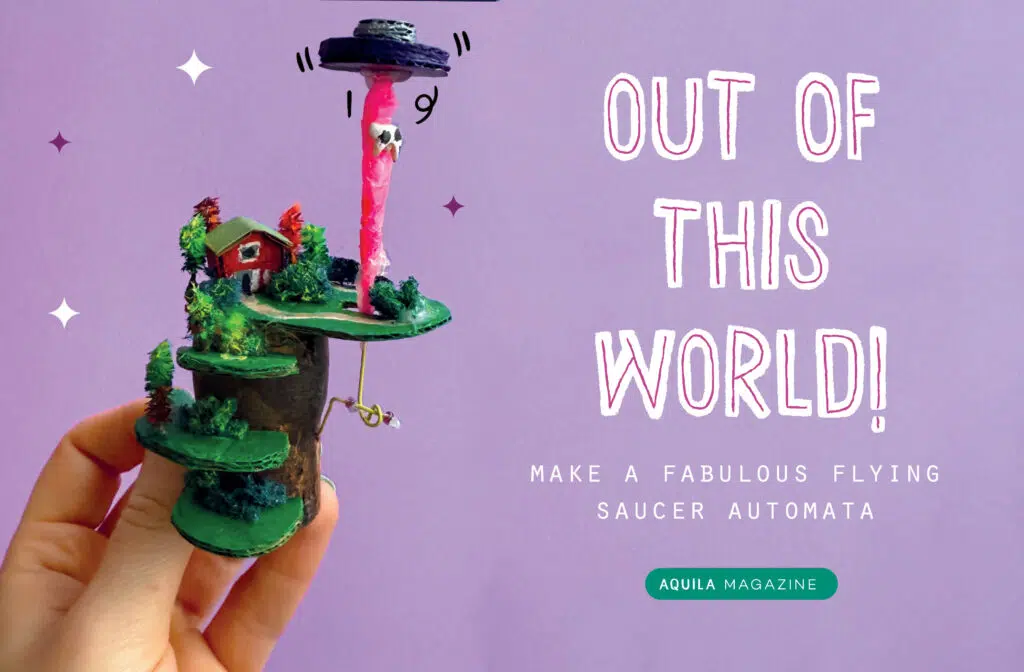
Flying Saucer Automata https://www.youtube.com/shorts/wX7H9WPjQao Words: The AQUILA team. Search Popular Keywords Categories No Record Found View All Results
Greek Myths Explained: Heroes, Monsters and Gods of Ancient Greece Heroes Many Greek myths featured a hero – that is,
Make an excellent eight-page zine A zine is a self-published print work, comic or book, produced in very small numbers.