MISSING MONARCHS

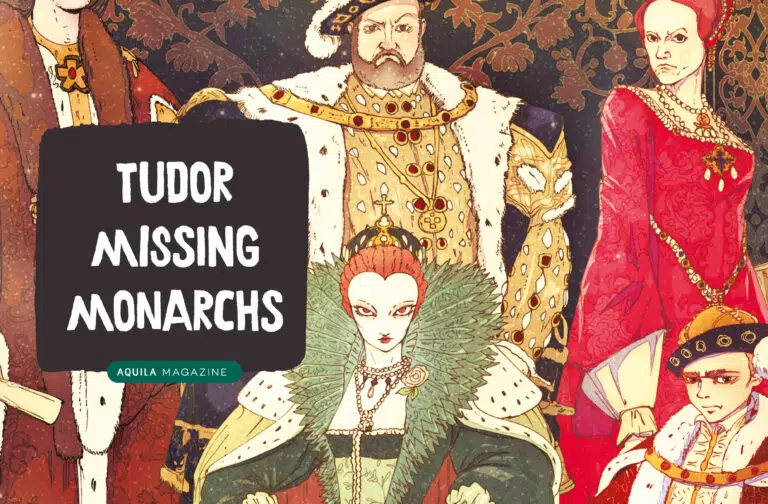
Ask most people what they know about the Tudors and the part they played in British history and the names Henry VIII and Elizabeth I are sure to crop up immediately. King Henry (ruled 1509–1547) was the man who loved to eat and play games while still finding time to have six wives (not all at the same time). Elizabeth I (on the throne 1558–1603) ruled during the ‘Gloriana’ period, working closely with explorers like Drake, Raleigh and Hawkins while not forgetting the defeat of the Spanish Armada.

      A check on the dates, however, reveals that there was an 11-year gap between Henry’s death (1547) and the start of Elizabeth’s reign (1558). So, who ruled over the country during this time? Let’s take a look, shall we?

Edward VI (1547-1553):

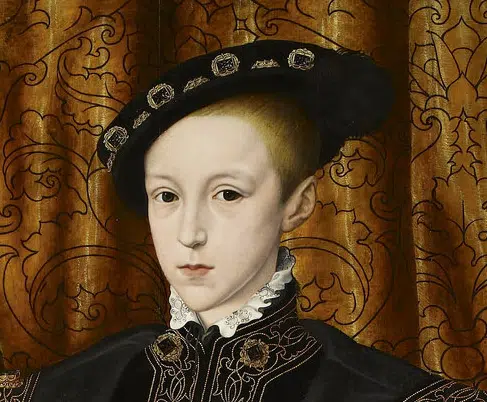
Edward was the son of Henry and his third wife, Jane Seymour, and was the only legitimate male heir to the throne. He was only nine when his father died. Henry left instructions that Edward should be assisted by a ruling council, but Edward’s uncle, Edward Seymour, the Earl of Hertford, and later to become the Duke of Somerset, soon emerged as the dominant, basically singular force.

King Edward proved to be an able pupil, and as he matured, it became clear he intended to follow the faith of the Protestant Church, which his father had set up. He sanctioned the publication of two new prayer books to enable services to be held in English instead of Latin. His reign, however, was not without its problems. There were several minor rebellions, a series of bad harvests that affected food prices as well as several epidemics including the plague and influenza.

By 1549, the Duke of Somerset had become unpopular, and he was to be executed in 1552. Replacing him as Edward’s chief advisor was Robert Dudley, later to become the Duke of Northumberland. Dudley’s career as a soldier appealed to Edward and he was given the title of Lord President of the Council. He sorted out financial problems and settled disputes with both France and Scotland. 

King Edward VI of England by William Scrots (ca. 1550). William Scrots' Oil Painting (ca. 1550), now in Public Domain, CC BY-SA 4.0 , via Wikimedia Commons

Lady Jane Grey (nine days in 1553):

As Edward moved into his teenage years he began to suffer from illness. When he was 15, it became apparent that he may not survive and Northumberland persuaded him to draw up an important document called My Devise for the Succession in which Mary and Elizabeth, the two daughters of Henry VIII, would be by-passed and the throne go to 16-year-old Lady Jane Grey, the great grand-daughter of Henry VII and conveniently married to the Duke of Northumberland’s son. Jane was proclaimed queen, never crowned, and ruled for just nine days until deposed by the Privy Council of England. Mary, with many followers, quickly put down any rebellion and claimed the throne. In the aftermath, Northumberland, Lady Jane Grey and her husband, Guildford Dudley all paid the ultimate price.

Mary 1 (1553-1558):

Now it was the turn of Mary, the eldest daughter of Henry VIII, to become queen. The first female monarch to rule in her own right, Mary was a staunch Roman Catholic like her mother, Catherine of Aragon, and bitterly remembered the way in which Catherine had been treated by her father. She quickly set into motion plans to move the church back to the Roman Catholic faith and began persecuting Protestants to discourage them from worshipping, many of whom fled the country. It is believed that over 280 people were put to death because of their Protestant beliefs, earning the new queen the title of ‘Bloody Mary’.

Even more discontent was to follow when Mary decided to choose a Spanish husband, the future King Philip II of Spain, and a minor rebellion led by Sir John Wyatt broke out in 1554. Despite this, the pair were married at Winchester Cathedral in the same year, although Philip’s powers in England were limited by an Act of Parliament. Once Philip had become King of Spain, he spent most of his time in his own country, and Mary was left to rule with her council of ministers.

Philip’s involvement led to the loss of territory in France, yet despite this, there is evidence that Mary’s reign was not without its successes. She proved to be strong-willed and resolute, yet sympathetic to the advice of the council and parliament. England’s finances were better than they had been in years, and she was able to increase revenue and cut down on wasteful spending. The country’s navy was reorganised and strengthened, and this was to prove beneficial later.

Mary died of influenza at the age of 42 in 1558 and was succeeded by her half-sister Elizabeth I, the daughter of Henry VIII and his second wife, Ann Boleyn. That ‘golden age’ was about to lift off, but how ‘golden’ it actually was is debatable.

Illustration: John Broadley

THIS MID-TUDOR CRISIS?

Some historians have described the reigns of Edward VI and Mary I as the Mid-Tudor Crisis, but in truth, the population in general fared no better or worse than the periods ruled over by Henry VIII and Elizabeth I. Between 1547 and 1558, the essential machinery of government faced problems but it was not under serious threat and did not break down. The power, as always, lay in the hands of a few leading nobles while the vast majority of the population still had to contend with the vagaries of poverty, hardship, the weather, religious contention, shortages of food, illness and disease.

If you enjoyed this historical helping of Tudor facts, check out a subscription to AQUILA magazine

Words: John Davis. Illustration: Christian Benavides

Flying Saucer Automata

Flying Saucer Automata https://www.youtube.com/shorts/wX7H9WPjQao Words: The AQUILA team. Search Popular Keywords Categories No Record Found View All Results
Read More »