Different Brains: All About Neurodiversity

The amazing thing about brains is that they’re all different. Like fingerprints, no two brains are the same. But what exactly is neurodiversity? And is there such a thing as a ‘normal’ brain? Here we take a look at how different brains affect us differently – and some of the more common conditions that are caused by differences in the brain.

What is Neurodiversity?

You’ve probably heard the word ‘diversity’ a lot. It means variety, a mix of different things. ‘Neuro’ is short for ‘neurological’, which means anything related to the nervous system – the brain, the spine and the nerves in our body. The term ‘neurodiversity’ recognises that everybody’s brains are different, and some people’s brains function in a way that is different to the majority. This can affect how they behave, interact with other people and process information. ‘Neurodiversity’ as a word was created in the late 1990s by an Australian scientist named Judy Singer. The term is often used when talking about certain conditions – more on that later.

Judy Singer via AXSChat, CC BY 3.0 , via Wikimedia Commons

What does it mean to be neurodivergent?

Although we are all different and no two brains are identical, doctors use the term ‘neurodivergent’ to describe a person who is differently abled to the majority of the population. According to the National Health Service (NHS), that’s estimated to be 1 in 7 of us in the UK. Although neurodivergence is classed as a disability, some neurodivergent people don’t identify as disabled. 

Common neurodivergent conditions

*Autism

This is the most common example of neurodiversity. Autism affects how people experience and interact with the world and other people. It is not a medical condition that has treatments, but some autistic people need support. 

*Attention Deficit Hyperactivity Disorder (ADHD)

This condition affects people’s behaviour, and can make them restless and have poor concentration. It’s usually diagnosed in childhood, but in the last five years there has been a big rise in the number of adults being diagnosed with ADHD.

*Dyslexia

This learning difficulty mainly causes problems with reading, writing and spelling. The NHS says about 1 in 10 people in the UK live with dyslexia. 

*Tourette’s Syndrome

Affecting the brain and nerves, Tourette’s Syndrome causes uncontrollable movements and sounds called tics. 

Is there such a thing as a normal brain?

Yes and no! ‘Normal’ is a word that can exclude people rather than include them. The term ‘neurotypical’ is used by some doctors and scientists to describe the majority of the population who don’t have neurodivergent conditions. 

Some people with neurodivergent conditions do use the term ‘neurotypical’ and consider ‘neurodiversity’ a useful and positive way of defining themselves. But some experts think the term is unhelpful, because they don’t think there’s any such thing as ‘typical’.

Does a neurodivergent brain need treating?

Many neurodivergent conditions do not require treatment or a cure. They are not illnesses and many people see them as just part of who they are. But some people living with neurodivergence will need support, and some conditions, including ADHD, can be helped with medication. 

A lot of progress has been made in recent years to reduce any stigma (disapproval and prejudice) about neurodiversity. Difference – or diversity – is normal and can be a positive thing. It’s good to celebrate how different all our brains are, while supporting those who need it.

If you’ve enjoyed this brainy blog then why not sign up to a subscription to AQUILA magazine! 

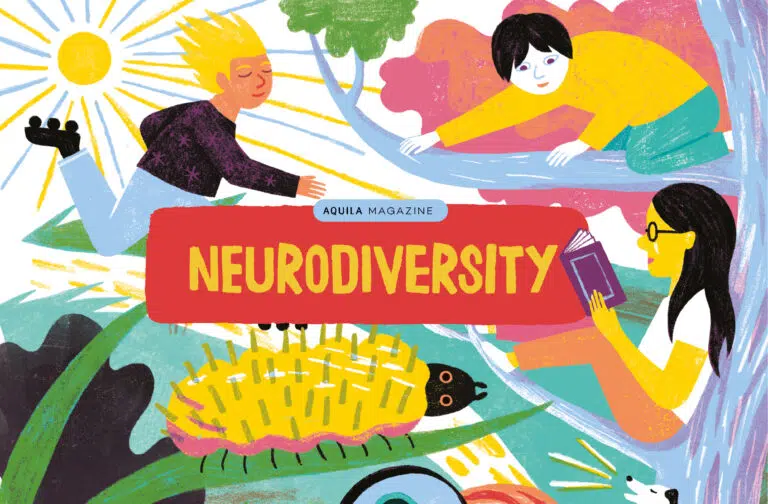
Written by Eddie De Oliviera. Illustration by Kaley McKean

Flying Saucer Automata

Flying Saucer Automata https://www.youtube.com/shorts/wX7H9WPjQao Words: The AQUILA team. Search Popular Keywords Categories No Record Found View All Results

Read More »