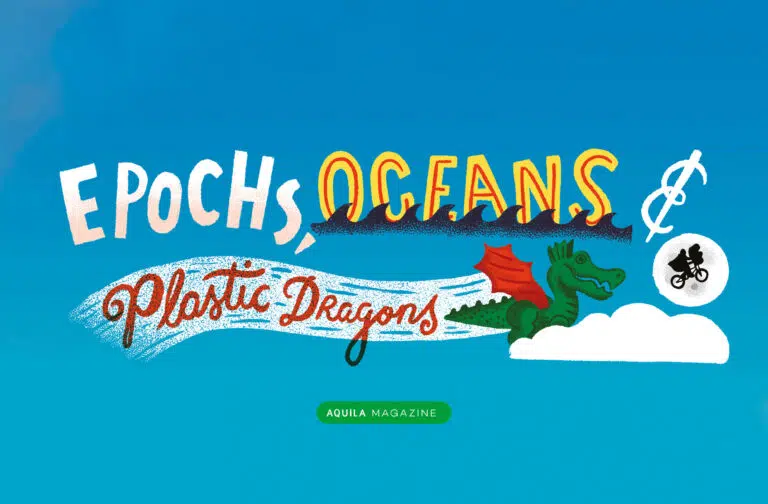
Epochs, Oceans and Plastic Dragons

We all know that plastic is having a long-term effect on the planet, especially the stuff that can only be used once, and the stuff that cannot be recycled. The uncomfortable reality is that sometimes there is simply no way of getting rid of it after we’ve thrown it away. Plastic has been found in the stomachs of countless sea creatures, and tiny pieces of plastic, called microplastics, have even been found in the deepest parts of our oceans. 

Yikes. Ed.

Yikes is right, and it’s not just plastic. Some scientists now think the human impact on our planet has been so massive in recent years that we should name a new epoch: the Anthropocene. 

OK, but what is an epoch?

I see you’re awake today. Good question. 

In order to study and compare the geological and environmental events that have happened on our planet, scientists have given names to different periods of time. These periods are measured on the geologic time scale (GTS) and are divided first into eons, then into eras, periods, epochs and ages. You may have heard the name of some periods, for example the Cretaceous, Jurassic and Triassic periods, when the dinosaurs were alive. We currently live in the Holocene epoch, which began at the end of the last major ice age, just under 12,000 years ago.

Illustration: Ed J. Brown

The idea of naming a new epoch to describe the changes humans have caused is a BIG one. The hope is that doing so might cause a shift in the way we all view our role in climate change.

Mid-century madness

No one has yet decided when the Anthropocene started. Geologists are looking for markers in the rock record (all the rocks that currently exist) to show when human activity became so intense that it changed the planet for good. There are many potential markers, one good example is the atomic age of the mid-twentieth century, when radioactive debris from nuclear testing left radioisotopes in the atmosphere.

Archaeology calling

This exploration of the modern-day is happening in a lot of different fields of study, not just geology. The punk archaeology movement began in 2008, when a small group of archaeologists including William R. Caraher and Kostis Kourelis discovered that they shared an interest in the music and culture of punk. They use punk ideas, working outside the boundaries of what is expected, to examine things that might not normally be looked at from an archaeological point of view; things like video games.

Dig Atari

A brilliant example of this can be seen in the excavation of a rubbish dump in New Mexico in 2014. These archaeologists had evidence that somewhere underneath all the rubbish was a load of unused video games mysteriously disposed of by the company Atari, in 1983. This involved a huge number of copies of an E.T. video game. Many of the video game cartridges that they found are now on display in museums, others belong to game collectors who wanted to own a piece of gaming history.

Illustration: Ed J. Brown

Lego lost at sea

In 1997, a container ship, the Tokio Express, was hit by an enormous wave off the coast of Cornwall, England, knocking 62 shipping containers into the sea. One of those containers contained almost 4.8 million pieces of Lego, including 4,200 black octopuses, 26,600 yellow life-preservers, 353,264 white, red and yellow flowers, 28,700 yellow life-rafts, and 33,941 dragons. Tracey Williams set up the Lego Lost at Sea social media project because she was interested to know ‘who was finding it, which pieces were turning up and how far it had travelled.’ She says that there is still a lot of Lego washing ashore, but that the kinds of pieces she finds has changed over time.

This is because a lot of the pieces that floated to the surface have already washed ashore, and the pieces that sank to the bottom of the ocean are now being released by high tides and stormy weather. An oceanographer named Curtis Ebbesmeyer says it is possible that, by now, some of the Lego from that spill has travelled all over the world. As well as Lego, Tracey has described some of the rubbish that she regularly finds on the beaches around her, most of it is modern but some of it is much older. She has found plastic toys from cereal boxes dating back to the 1950s and plastic curtain hooks which may have been floating around since the 1940s.

Taking it further 

Why not take part in a #2minutebeachclean or get involved in the Swedish activity of plogging – a combination of jogging and litter picking! 

If you’ve enjoyed this excellent  then why not sign up to a subscription to AQUILA magazine! 

Words: Frances Durkin. Illustration: Ed J. Brown

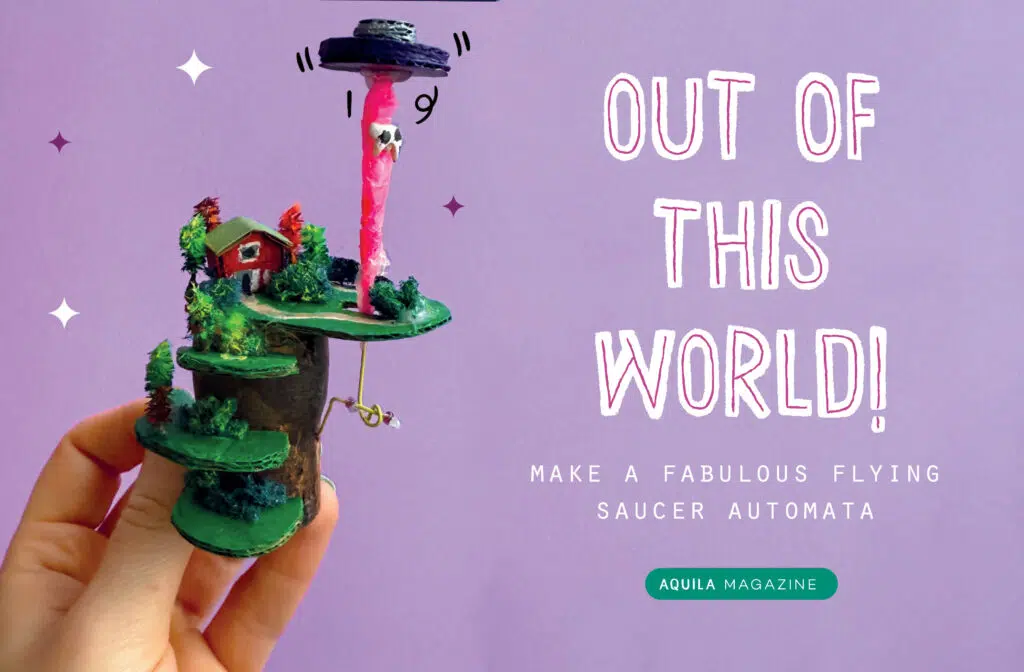
Flying Saucer Automata

Flying Saucer Automata https://www.youtube.com/shorts/wX7H9WPjQao Words: The AQUILA team. Search Popular Keywords Categories No Record Found View All Results
Read More »