Unearthing Treasure: The Science and Story Behind Gold, Silver, and Diamonds

Gold and silver

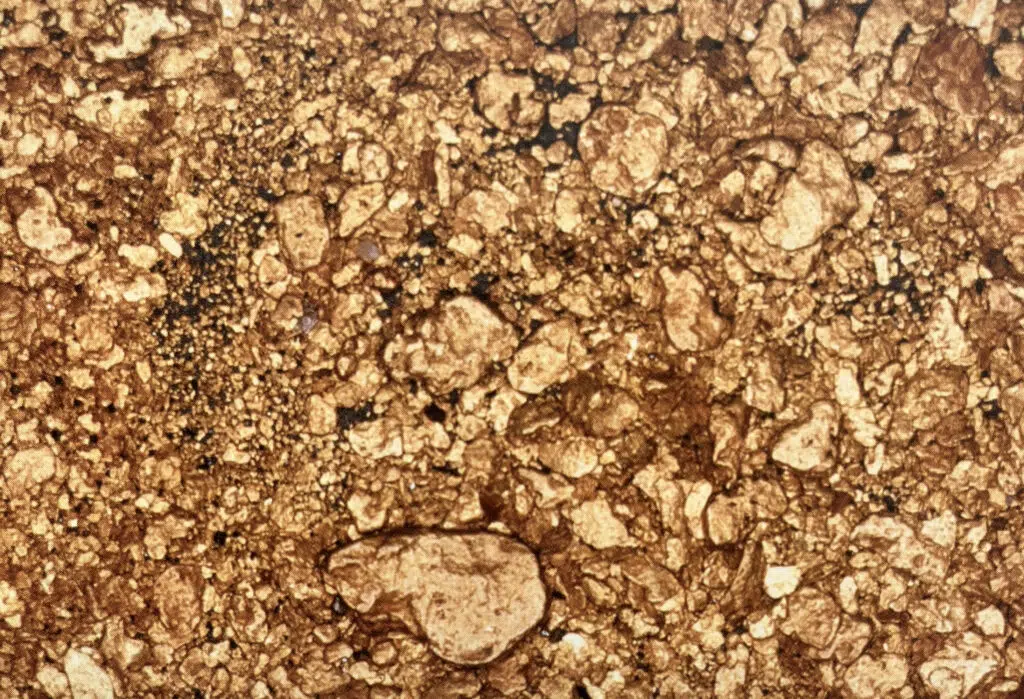
These metals are valuable because they are attractive, especially gold. Both gold and silver are dense; they are heavier than other metals, and this makes them seem especially important. Although gold is rare, it is found in the ground as gold metal. We say that it is found “native”, and ancient races of people have known gold longer than any other metal. Unlike most metals, which occur as chemical compounds in rocks, gold is found as nuggets of gold, especially in river beds, where the rock has been worn away. Some silver is also found “native”.

Gold nuggets panned from a riverbed in the Andes

Gold is chemically unreactive; it is very reluctant to react with other chemicals to form compounds. Most metals will react with oxygen so they are often found as metal oxides in the Earth’s crust. Gold’s unreactivity means that it stays just as gold, forever. That is why it would be in treasure, because it is sure to last a very long time. There are many examples of intact gold jewellery being found from very ancient civilisations, such as Inca, Egyptian and Mayan, from thousands of years ago.

In the Middle Ages, the alchemists thought gold the purest (most “noble”) of all substances because it would not react. They thought (wrongly!) that other “base” metals were less pure or virtuous than gold, but that some metals were close to being as pure as gold. Heavy metals such as mercury and lead are not very reactive, so they were thought to be similar to gold. The alchemists thought that if they could find a way of making these metals purer, they might actually turn into gold. Of course it didn’t work: it isn’t possible to change one element into another by chemical methods.

Did You Know?

Pure gold is called 24 carat gold. It contains only gold and it is the most expensive. Gold mixes easily with other metals, especially silver and copper, and these alloys are cheaper and also harder (pure gold is relatively soft). The goldsmith knows these “lesser” grades of gold as 18 carat (75% gold i.e. 18 parts of 24), 14 carat, 12 and even 9 (37.5% gold) carat. The more silver present, the lighter the colour of the gold.

Diamonds

Beautiful diamond gemstones are pure carbon with its atoms arranged in a very strong way.

There are no materials which can scratch it; it is the hardest natural material. Inside the crystal, each of the carbon atoms is strongly bonded to four others:

The word diamond comes from the Greek adamas, meaning unconquerable. Diamonds are very durable and when they have been cut to shape, they catch the light beautifully. This is due to their high refractive index, which means how much the diamond bends light rays.

The weight of a diamond is measured in carats, not to be confused with gold carats. One carat is 200 milligrams (0.200g). The name comes from classical times. It was the weight of one of the seeds of the carob tree (Ceratonia siliqua, also known as St. John’s Bread). The seed used to be known as the siliqua or keratia.

The largest gemstone diamond is the Great Star of Africa. It weighs 530.2 carats and is part of The Crown Jewels, kept in the Tower of London.

You can find out about more large famous diamonds at www.pineglen.com/d_famous.htm

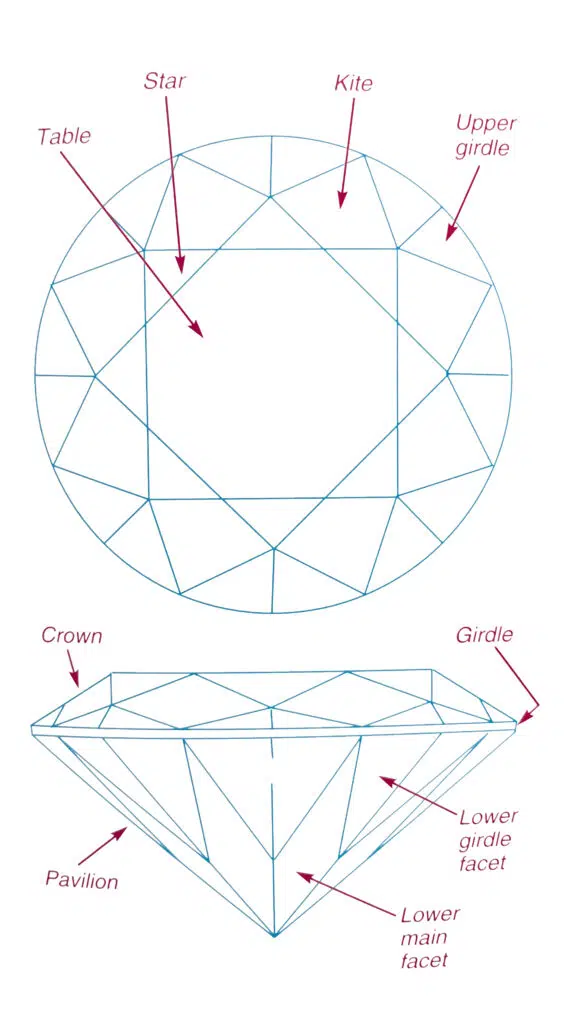
Cutting converts a rough diamond into a shiny gemstone. A popular finished shape is the “round brilliant” which gives a very high degree of refracted light.

Alvin Padayachee, Public Domain, via Wikimedia Commons

Synthetic diamonds

Diamond isn’t the only pure form of carbon. Graphite, which is part of “pencil lead”, is also carbon with its atoms arranged differently. It is possible to make artificial (synthetic) diamonds from graphite. It requires a huge pressure and heat. Until recently only small industrial diamonds could be made in this way, but now it is possible to make much bigger gemstone-like diamonds. You might have had industrial diamonds in your mouth, at the dentist!

The tip of a dentist's drill, showing numerous diamond particles, magnified many times using a scanning electron micrograph

Did You Know?

It is possible to have a diamond made from someone’s cremation ashes. It is very expensive, but some people might wish to have a diamond made from a dear deceased relative!

If you’ve enjoyed this blog and want to read more fascinating facts, then why not get a subscription to AQUILA magazine

Words: Iqbal Hussain. Illustration: Sean Lewis

Flying Saucer Automata

Flying Saucer Automata https://www.youtube.com/shorts/wX7H9WPjQao Words: The AQUILA team. Search Popular Keywords Categories No Record Found View All Results
Read More »