Make popping candy
Make your edible space dust We’re going to make our own version of space dust! Whaaaaat?! Surely you need a

Even in wartime, fact is often stranger than fiction. In our World War II issue of AQUILA Magazine we showed you some Tricky Tactics about inflatable tanks and exploding bats. But there’s more! Here are some startling facts and strange goings-on that might have come from a story book or a film if they weren’t, of course, absolutely true!
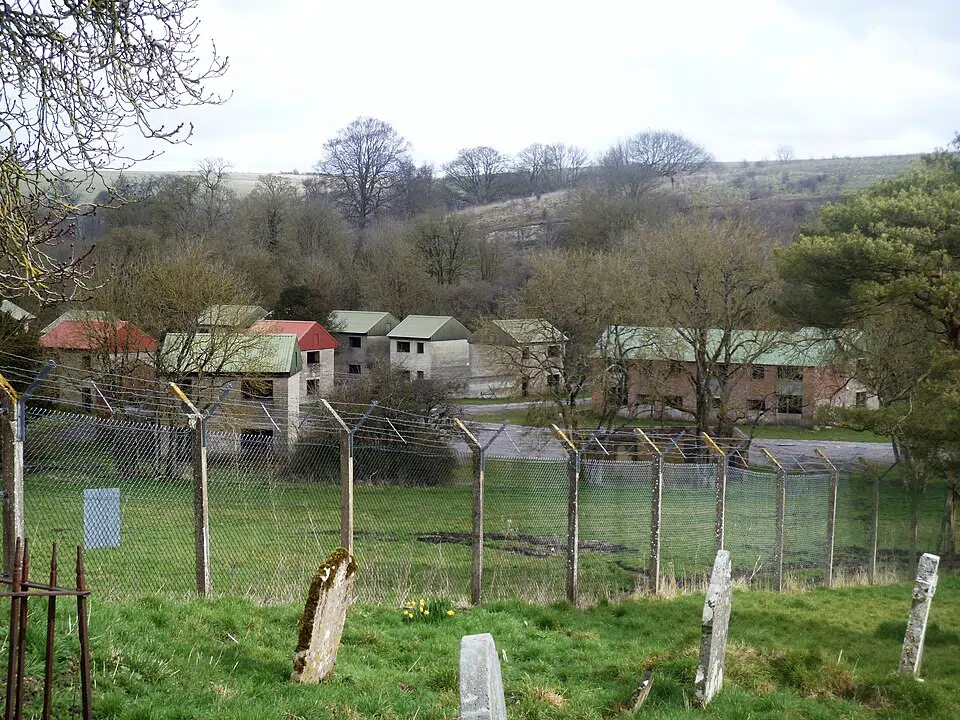
Many people in Britain lost their homes to bomb damage during World War II but there were two groups of villagers who were turfed out and made homeless from perfectly sound and safe dwellings… and never allowed to return.
The first were the 150 inhabitants of Imber on Salisbury Plain in Wiltshire, an area used by the Ministry of Defence for training soldiers. The soldiers were preparing for D-Day in 1943 and needed the buildings to carry out manoeuvres. The people of Imber were told they could return to their homes once the war was over but it never happened and the MOD kept the land.
Today, all that really remains intact in the village is St. Giles Church, a Grade One listed building, and the site can only be visited at certain times of the year. In 2026 this will be 18-21 April, 16 August and 23-25 August.
The same thing happened to the 225 villagers at Tyneham near the Dorset coast where the Lulworth ranges were used for tank training and still are today. At Tyneham, the church and the school survive and they are often open to walkers at weekends when the Army is not operating.
As you wander through a picturesque stretch of forest near Farnham in Surrey, complete with a variety of native trees, wild flowers and woodland animals, it comes as a major surprise to suddenly encounter a 100-metre stretch of thick reinforced concrete wall.
The wall, over three metres high and three-and-a-half metres thick, is a small replica of the Atlantic Wall – a series of defences the Nazis had built in occupied Europe going from Denmark, down through Holland, Belgium and France to stop the Allies from invading.
Engineers knew the woodland wall had been constructed in the correct way and from the same materials as the real Atlantic Wall because details about it had been smuggled out of France by secret agents.
Tests on the wall were carried out by special tanks who would place an explosive device at the base of the wall, reverse back, wait for the bomb to go off and then drive through the gaps made where the wall had been breached. The wall today does show damage where this plan had worked successfully.
Finishing schools for young women were very popular during the 1930s in the years leading up to World War II. But what’s more unusual is that the Nazi German government should open one in Britain in the coastal town of Bexhill-on-Sea, Sussex.
The sole purpose of the school, run by Frau Helena Rochell and named Augusta Victoria College after the last German Empress, was to equip young German women between the ages of 16 and 21 to marry into the upper echelons of British aristocracy and to infiltrate society prior to the invasion of Britain. The young ladies, who included Bettina, the daughter of Nazi Germany’s Foreign Minister Joachim von Ribbentrop, were intended to promote German culture and traditions under the guise of ‘international friendship’. Etiquette, dance, and English literature and language were also studied.
At that time Bexhill-on-Sea had a large number of private schools so, despite what was happening in Germany, most locals seem to have accepted the school, its staff and pupils without problems.
At the outbreak of war in September 1939, the girls returned home immediately. Today the large building where the school was based has been converted into flats and apartments.
What do you do if you want to persuade the enemy that you are going to attack in one place when you really intend to do it somewhere else? You find a dead body, dress it up, provide it with false information and then set it floating in the sea. Of course you do.
That’s what happened in a cunning plan that became known as Operation Mincemeat-one of the cleverest ruses carried out during the whole of World War II.
In the summer of 1944, the Allies were planning a landing on Sicily and the base of Italy in the Mediterranean but they wanted the enemy powers to think they were going to attack through Greece or possibly Sardinia.
The plan involved creating a false identity for the dead body – actually a homeless person who had recently died in London. A briefcase full of plans and documents was attached to the body which, using a submarine, was left floating in the sea off the coast of Spain as if it had got there following a plane crash. The expectation was it would be discovered and passed on to German spies. The body was dressed in a Royal Marine uniform and given the personal possessions of a certain Major William Martin including letters, photographs and bills.
The ruse worked perfectly. Spies passed on the information contained in the documents, many divisions of soldiers were moved to Greece and, when the landing did take place in Italy, thousands of lives were saved. The body was actually that of a Welshman named Glandwr Michael, and later he was given a proper burial in a cemetery in Huelva in Spain. The deception has been the subject of books and films and the story has now been made into a musical.
If you’ve enjoyed this blog and want to read more about history then why not get a subscription to AQUILA magazine!
Written by John Davis. Illustration by Sean Lewis

Make your edible space dust We’re going to make our own version of space dust! Whaaaaat?! Surely you need a


Can We Really Live on Mars? The Science of Terraforming What are we going to do when we have finished

Alien Brains When you imagine an alien, what do you see? Do you see a little green person with big

Flying Saucer Automata https://www.youtube.com/shorts/wX7H9WPjQao Words: The AQUILA team. Search Popular Keywords Categories No Record Found View All Results
Greek Myths Explained: Heroes, Monsters and Gods of Ancient Greece Heroes Many Greek myths featured a hero – that is,
Make an excellent eight-page zine A zine is a self-published print work, comic or book, produced in very small numbers.