DIG FOR VICTORY

Food is something many of us* are lucky to be able to take for granted. We can go to the supermarket or the local shop and choose from a fantastic range of delicious things to eat. But these circumstances can change. Sometimes food isn’t so easy to find.

In 1939, the outbreak of World War II meant a dramatic change in the lives of people whose countries were at war. Not only did many men and women go away to help in the war effort, those that stayed at home had to deal with major alterations to the way they lived. As an island, Britain had long depended on food from other countries being imported from overseas by ship. During the war these trade routes became blocked. Ships could not get to Britain with food for people to eat.

Food shortages quickly became a problem. Not only was there not enough to eat, what there was became very expensive. Some items, such as oranges, bananas and ice cream disappeared almost completely from normal diets. In order to make sure that there was enough food to go around, the government introduced rationing.

What is ‘rationing’ then? It sounds awful!

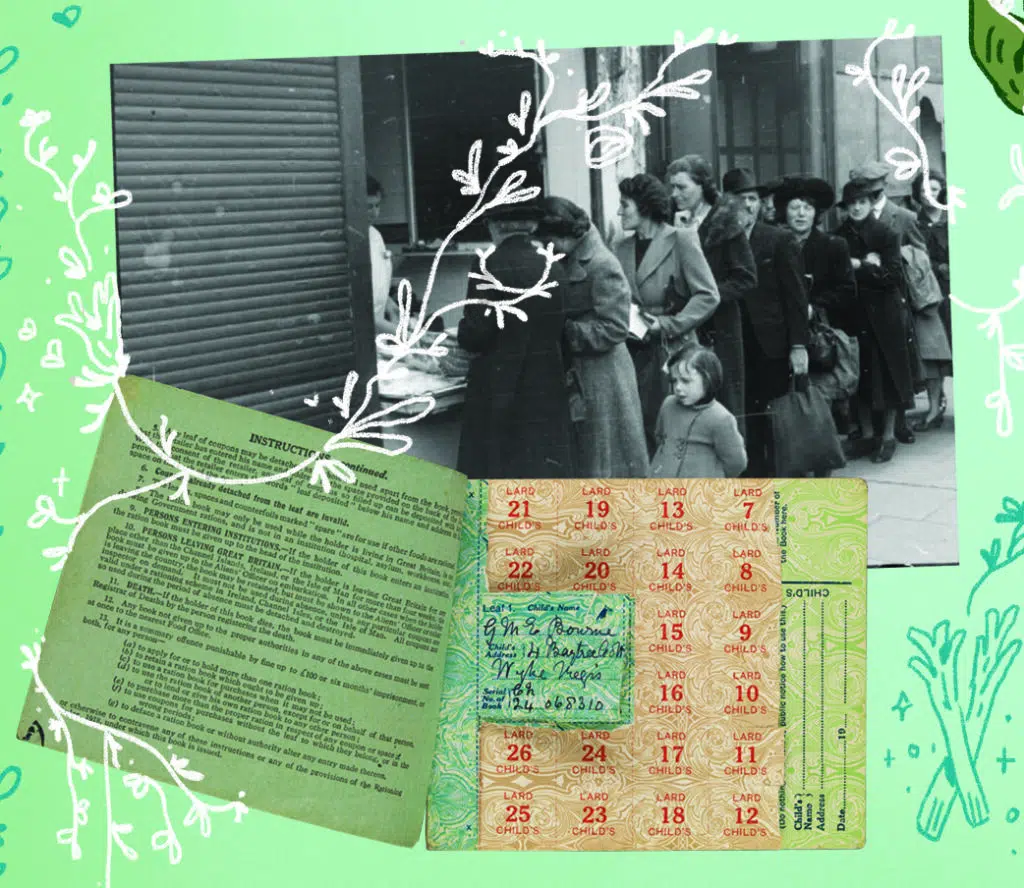
Rationing meant the food that was available could be controlled and carefully shared out between everybody in the country. Fruits and vegetables contain important vitamins that people need to stay healthy, so they were never rationed. Sometimes, though, there just wasn’t enough fresh produce to go around. Eventually the government decided to set up a project to increase the amount of fresh food grown here in Britain. 

Men, women and children queue outside a fishmonger, in wartime London, to collect their rations. Illustration: Joe Todd-Stanton

Dig for Victory

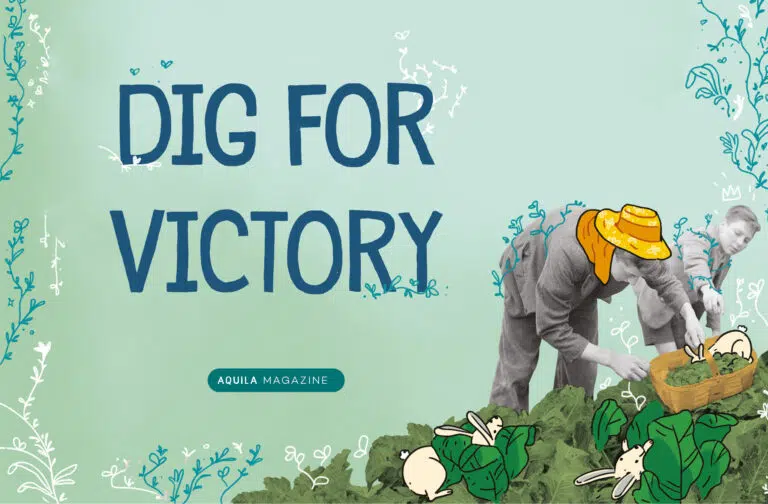
The Dig for Victory campaign was launched by the Ministry of Agriculture. It encouraged people to grow their own food. An enormous effort was put into educating people about how they could use any available piece of land to cultivate plants to eat. Leaflets were printed that told people how to grow their own crops. Gardening lessons were even taught in schools once a week. Cartoon characters called ‘Doctor Carrot’ and ‘Potato Pete’ appeared on posters, encouraging people to eat more vegetables. The Royal Horticultural Society travelled around the country with information on what people could grow, and how to cook with their own produce. 

Dig for Victory poster by Le Bon. Illustration: Joe Todd-Stanton

The race for space

Once people knew how to ‘Dig for Victory’, they needed to find places where they could plant their own crops. Many people used space in their gardens and allotments but others were really creative and took advantage of anywhere seeds could grow. Even the smallest window boxes began to contain vegetables instead of flowers. A demonstration plot of land was set up at London Zoo to show people what they could do, and the moat at the Tower of London was dug over and turned into vegetable beds. A restaurant on Regent Street became a vegetable garden and allotments were established in Kensington Gardens. Soil on building sites that had been bombed was sieved to remove glass, and plants were grown inside bomb craters. Any spare ground at military bases was given over to gardening. At RAF Ringway in Manchester, planes took off alongside land covered with fresh vegetables. The government had the power to take over land for farming use, and War Agricultural Committees were set up to look for large areas of land that could be used for growing food. They looked for spaces such as golf clubs to convert into gardens.

The allotments in Kensington Gardens, London. Illustration: Joe Todd-Stanton

The Dig for Victory campaign was vitally important to people living in Britain during World War II. It was a brilliant initiative, which increased production of fresh fruit and vegetables when limited access to food meant there was a risk of starvation and of illnesses caused by not getting enough vitamins. 

World War II ended in 1945 but rationing continued until 1954. As trade routes reopened and food imports started to increase, the need for the Dig for Victory scheme gradually faded away. However, the spirit of the campaign can still be found today. All over the world, people who call themselves ‘guerrilla gardeners’ are taking over abandoned and neglected land to grow food. Urban agriculture projects are being established to turn land in cities into gardens. These schemes not only take advantage of unused land, they also give less fortunate families access to fresh, healthy produce. They are very good for the environment because very little packaging is used and the amount of carbon needed to transport the food is very small. 

In a time of food poverty and climate change, ideas from the wartime Dig for Victory campaign can still be used to make unusual spaces useful and to give healthy food to people who need it.

Amateur gardeners down tools for tea and sandwiches. Illustration: Joe Todd-Stanton

* In 2024/25 food banks distributed over 1 million emergency parcels to children in the UK. www.trusselltrust.org

If you’ve enjoyed this excellent blog then why not sign up to a subscription to AQUILA magazine! 

Words: Frances Durkin. Illustration: Joe Todd-Stanton

Flying Saucer Automata

Flying Saucer Automata https://www.youtube.com/shorts/wX7H9WPjQao Words: The AQUILA team. Search Popular Keywords Categories No Record Found View All Results
Read More »