Make popping candy
Make your edible space dust We’re going to make our own version of space dust! Whaaaaat?! Surely you need a
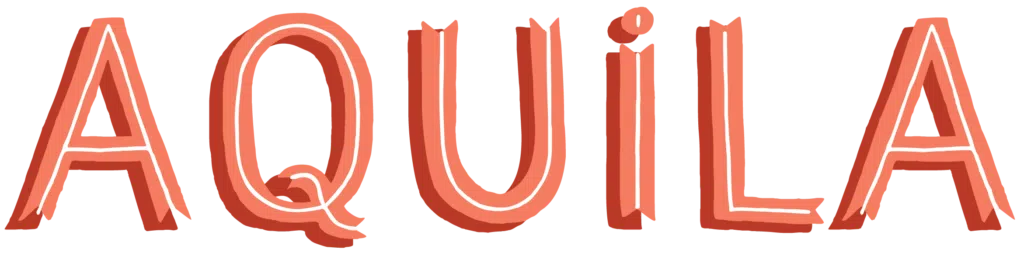
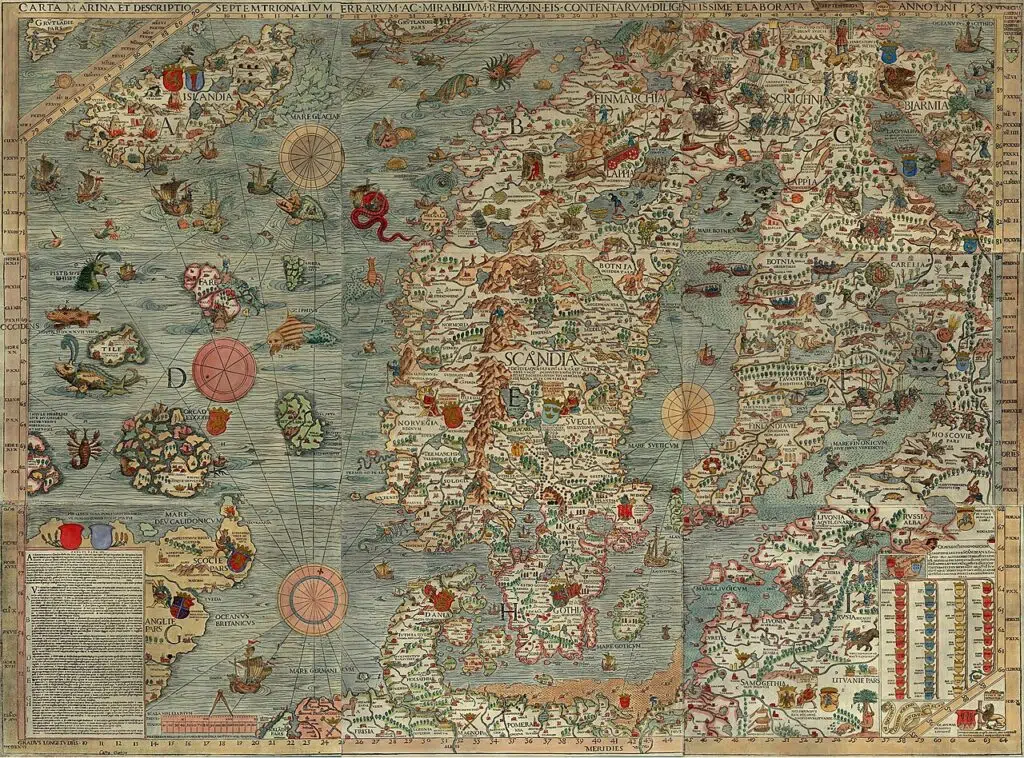
How do you feel when you gaze out to sea? Are you desperate for a life on the ocean wave, or does the thought of endless open water strike fear into your bones? Even with all of today’s modern technology at our fingertips, sailing is still a relatively dangerous occupation. Our ancestors were very good seafarers but they knew very little about the ocean. Many even believed that enormous sea monsters lay in wait for them in the inky depths. Maps from the medieval and Renaissance periods include pictures of these extraordinary creatures. Today these maps exist to remind us just how scary sea travel once was.
Let’s travel back to the Middle Ages, when European explorers were busy investigating parts of the world that were totally new to them. For millennia, people had been mapping the shape of the land and the stars above, but the sea remained a mystery. Cartographers (map makers) filled their oceans with pictures of things they thought might live in the water.
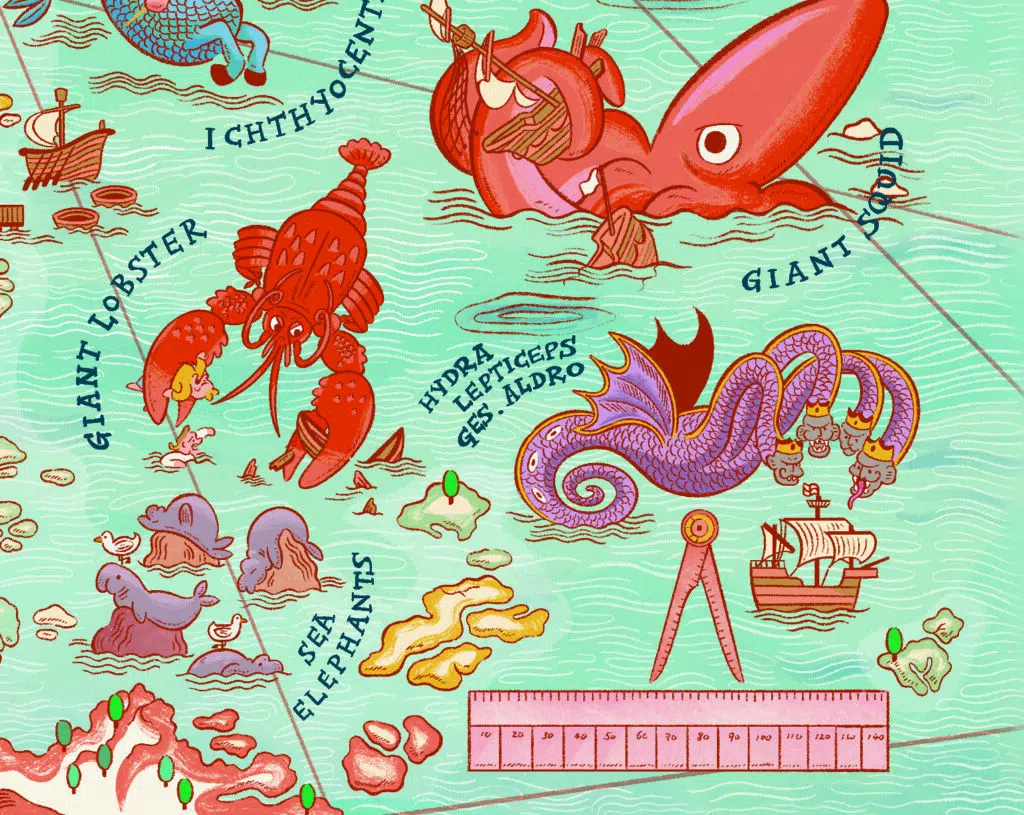
The monsters found on these medieval maps were often inspired by very old stories, like the ancient Greek tale of Odysseus. Odysseus tells us of his encounters with a sea monster named Charybdis, who lives under a rock and regularly swallows huge amounts of water before belching it all back up again, creating huge whirlpools that can drag ships underwater. Beautiful sirens lure sailors onto rocks where ships are dashed and wrecked. Ancient Greek art also features ichthyocentaurs: part-man, part-horse and part-fish.
The Romans came up with the weird idea that all the creatures of the land had equivalent versions under the sea. (They weren’t actually all that wrong. A whale’s closest living relative is a hippo, after all.) These strange hybrid animals appeared on maps alongside merpeople, and they were regularly described in beautifully illustrated medieval books called bestiaries. Some maps show extraordinary beefed-up versions of creatures we would actually recognise today, such as enormous whales, magnificent octopuses and terrifying giant lobsters.
The most famous kind of medieval maps were mappa mundi. These were more symbolic than practical, and they were often embellished with sea monsters. The majority of the fantastic creatures painted onto maps were really meant to entertain the rich nobles who commissioned them. Wealthy patrons enjoyed showing off highly decorative maps, so cartographers could charge more money for them. Real mariners, on the other hand, used much more practical portolan charts to actually navigate with. Most of these charts did not have monsters on them, but it is thought that some were included to mark places where real dangers (like whirlpools) might lurk.
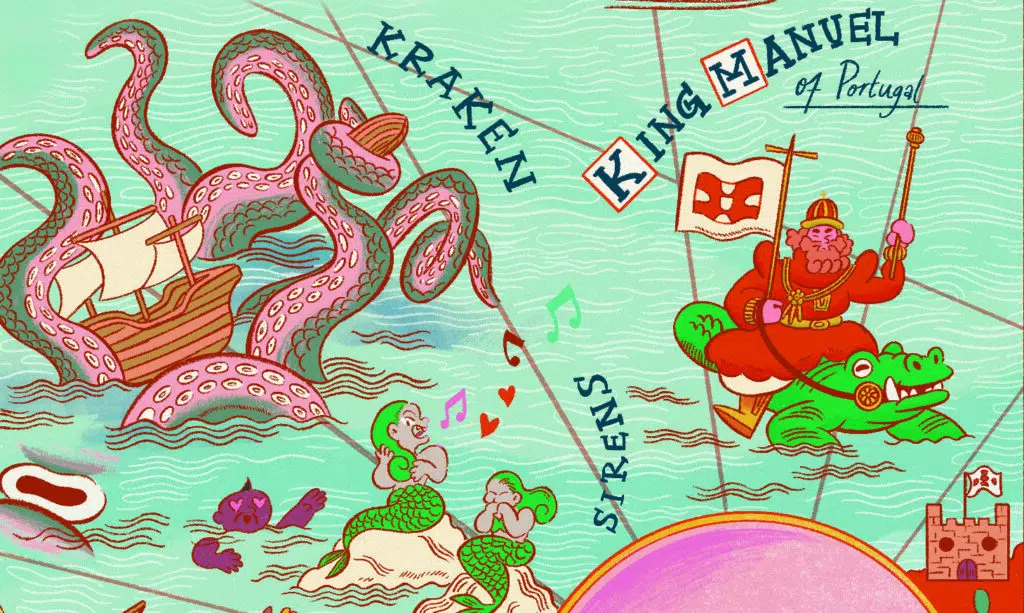
Sea monsters continued to appear on maps right through the European Renaissance. In 1516, a Portuguese map shows King Manuel riding a sea monster to symbolise that his country ruled the waves. (Arrogant much? Ed) By the late 17th century scientific knowledge had advanced. From that time onwards, maps tended to be decorated with more realistic looking animals and pictures of ships that had demonstrated humans’ new found ‘power’ over the oceans.
These days we understand the oceans much better than we used to. We know that our seas ARE populated by incredible sea creatures, some of which wouldn’t look out of place on those fanciful medieval maps. For example, the legendary kraken appeared in old tales as an enormous, many-armed sea monster that dragged ships to a watery grave. Could this be a reference to some ancient cephalopod ancestor of the colossal squid (Mesonychoteuthis hamiltoni), or giant squid (Architeuthis dux)? We’ll probably never know the answer to that one, but there is still a lot we can find out. As recently as 2017, only six per cent of the sea floor had been mapped to modern standards. That year a project called Seabed 2030 was launched with the aim of mapping the entire ocean floor by the year 2030.
That’s great, but why do we need to map the ocean floor? Ed
Modern maps of the ocean floor are important because they help scientists to understand underwater ecosystems in greater depth, to monitor the effects of climate change more accurately, and to help predict natural disasters such as tsunamis. Who knows what researchers may uncover? Don’t hold your breath, but maybe, just maybe, there really are one or two map-worthy monsters waiting for us to find them.
Today there are more than 1.2 million kilometres of cables underneath the sea and they supply almost all of our communications network for our telephones and internet.
If you’ve enjoyed this brill blog, find out about subscribing to AQUILA today!
Words: Frances Durkin. Illustration: Robbie Cathro

Make your edible space dust We’re going to make our own version of space dust! Whaaaaat?! Surely you need a

Can We Really Live on Mars? The Science of Terraforming What are we going to do when we have finished
Alien Brains When you imagine an alien, what do you see? Do you see a little green person with big
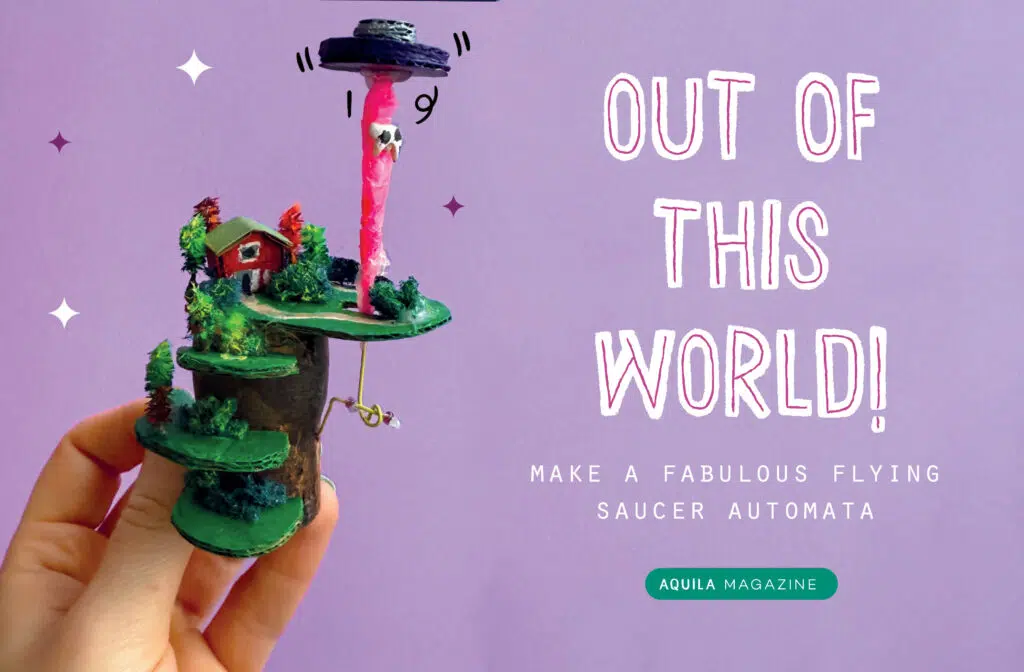
Flying Saucer Automata https://www.youtube.com/shorts/wX7H9WPjQao Words: The AQUILA team. Search Popular Keywords Categories No Record Found View All Results
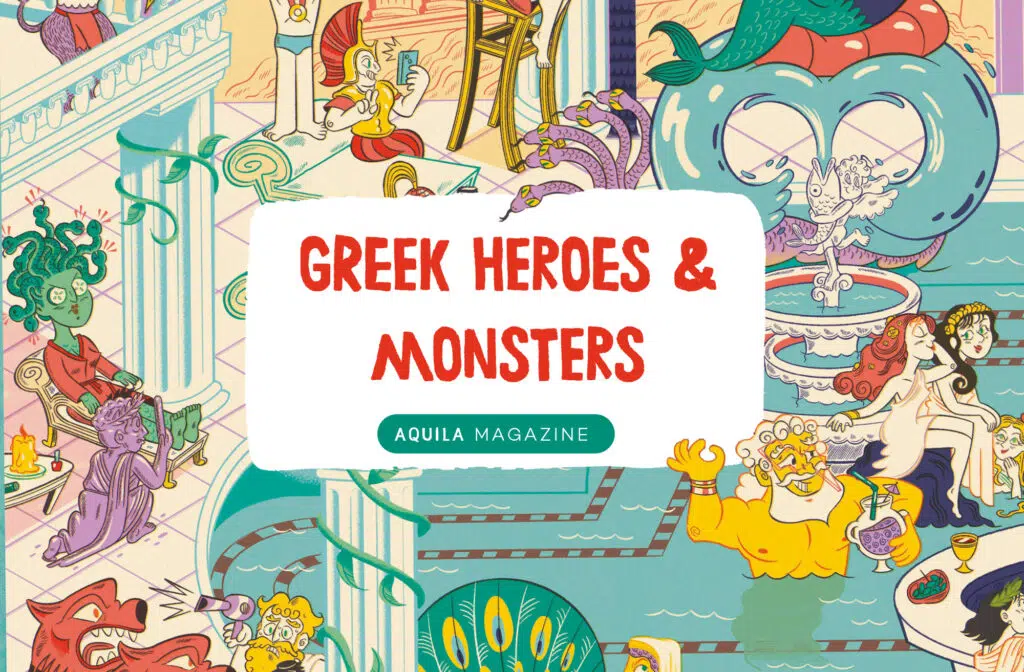
Greek Myths Explained: Heroes, Monsters and Gods of Ancient Greece Heroes Many Greek myths featured a hero – that is,
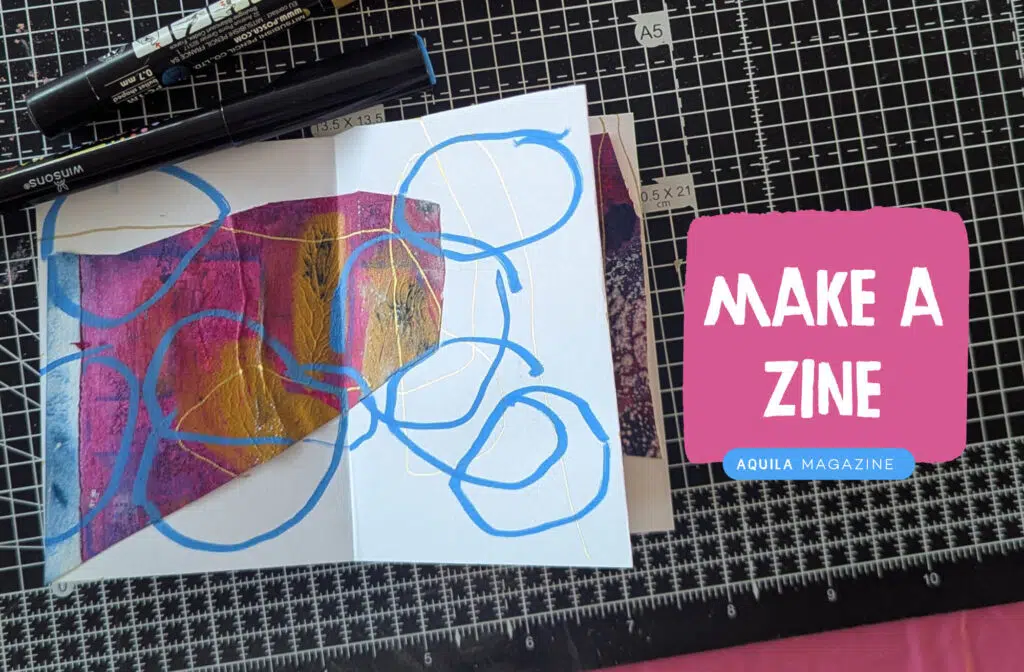
Make an excellent eight-page zine A zine is a self-published print work, comic or book, produced in very small numbers.