Make popping candy
Make your edible space dust We’re going to make our own version of space dust! Whaaaaat?! Surely you need a

Disclaimer: If you’re feeling squeamish or don’t like gross science, this article might not be for you. If so, why not read another one of our blog posts or download one of our Awesome Activity Sheets instead by following this link.
Picture this: you’re floating peacefully in a hot spring. Warm water covers your shoulders as you slip deeper into the water. For a moment, you’re so relaxed, your face slips under the surface and water rushes up your nose. No problem, right? Well, you’re almost certainly going to be absolutely fine. But there is a tiny chance that you’ve been sharing the water with a tiny, single-celled organism called a brain-eating amoeba.
BRAIN-EATING WHAT?? Ed
These microscopic little critters, known by the scientific name Naegleri fowleri, like to hang out in warm, fresh water. They are particularly fond of hot springs but can also be found in soil, poorly maintained swimming pools and warm freshwater lakes.
When they are living free in the environment they gobble up bacteria, but they are not fussy. If they manage to slip up your nasal cavity and into your brain they will start to munch on whatever they find there too – including brain tissue.
GULP! And how would I know?
Patients usually notice symptoms a few days after being infected. These include vomiting, a high fever, headaches and neck stiffness. Sadly, this kind of infection can be very deadly. Around 95 per cent of patients die within a week.
OK, excuse me while I FREAK OUT! Ed
Before you start to panic, remember that these brain-guzzling organisms are EXTREMELY rare. Only a handful of people are infected every year, and as treatments and diagnostics improve, doctors are getting more skilled at curing patients when they get to the hospital in time.
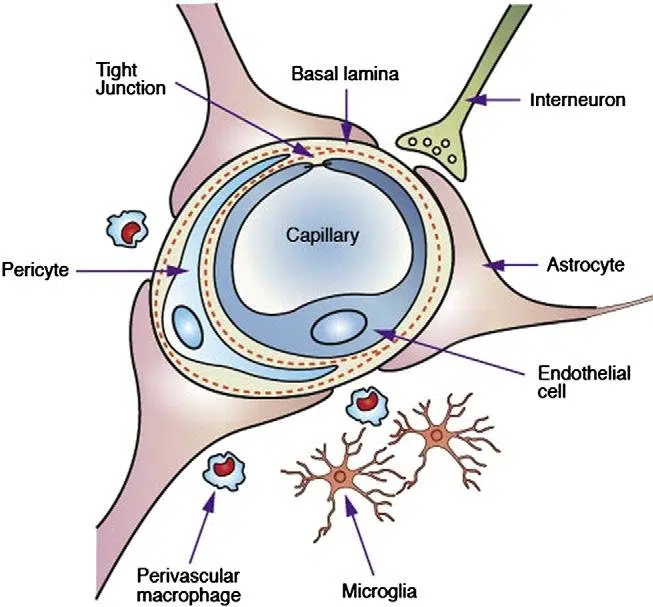
While the world is full of tiny, infection-causing organisms, most of them can’t get into our brains, because they are protected by an amazing, built-in filter called the blood-brain barrier. This is a layer of many, tightly packed cells that defend your brilliant brain from anything harmful that tries to enter.
So are there any other organisms that can slip past the brain’s bodyguards to cause infection? Ed
Yes! Some of the other sneaky invaders that can sneak through the filter and cause damage to our precious brains include the pork tapeworm, the often harmless Toxoplasma gondii and Trypanasoma parasites, which cause sleeping sickness.
I wish I hadn’t asked now. Ed
I’m glad you did, because they are all FASCINATING. The largest of these is the pork tapeworm. Like many parasites, it has a complicated lifecycle that involves multiple hosts, relying on both pigs and humans throughout its life.
Sounds like it’s getting worse, the more you have to say on the matter.
Not worse; more interesting.
Hmm not sure I agree, but go on… Ed
When a pig eats a pork tapeworm egg, it travels to the pig’s intestines. There, a larva hatches from the egg and travels through the bloodstream to the pig’s muscles, where the larva forms a cyst. When humans eat the infected pig muscles as pork meat, the tapeworm cysts travel into the intestines and become adult tapeworms before releasing eggs, which pass out of the human as poo.
If this poo manages to find its way onto human foods – this often happens when there is poor sanitation or where people are not washing their hands well enough after going to the toilet – then tapeworm eggs can be eaten by people. When people eat an egg, rather than a cyst, something different happens. Instead of an adult forming in the human’s intestines, a larva hatches from the egg and moves through the intestines to the bloodstream, where it can be carried to the human’s liver and brain.
When a tapeworm larva reaches the brain, it forms a cyst and causes a condition called neurocysticercosis. This can result in severe headaches, blindness, convulsions and seizures. Luckily, it is easily treated, and transmission can be prevented by good hygiene and sanitation practices as well as careful checking of meat before it enters the food chain.
I’m feeling totally grossed out about all this brain parasite chat. Is there any good news?
Yes! Do not fear, it’s not all bad news!
Some of you readers have probably already been infected by a brain parasite without even knowing it! Statistically speaking, around a third of the world’s population have already been infected by this brain parasite (I SAID GOOD NEWS, this doesn’t sound great!).
I’m getting to it. Toxoplasma gondii is a small, single-celled parasite that can be found in soil, water, meat and cat poo. Most people who get it will never have any symptoms, though sometimes it can make you feel like you have the flu. Some studies even suggest that if you’ve been infected with it, you are more likely to take risks or be an entrepreneur!
If you’ve enjoyed this brainy blog then why not sign up to a subscription to AQUILA magazine!
Written by Jess French

Make your edible space dust We’re going to make our own version of space dust! Whaaaaat?! Surely you need a

Can We Really Live on Mars? The Science of Terraforming What are we going to do when we have finished

Alien Brains When you imagine an alien, what do you see? Do you see a little green person with big

Flying Saucer Automata https://www.youtube.com/shorts/wX7H9WPjQao Words: The AQUILA team. Search Popular Keywords Categories No Record Found View All Results

Greek Myths Explained: Heroes, Monsters and Gods of Ancient Greece Heroes Many Greek myths featured a hero – that is,

Make an excellent eight-page zine A zine is a self-published print work, comic or book, produced in very small numbers.